
B2B SEO keyword strategy is defined as the practice of selecting and organizing search terms that match how business buyers research, evaluate, and purchase solutions. Unlike B2C keyword planning, which targets broad consumer intent, B2B keyword research must account for longer sales cycles, multiple decision-makers, and highly specific buyer language. The types of B2B SEO keyword strategies you choose directly determine whether your content attracts qualified prospects or just generates traffic that never converts. High-intent keywords with as few as 90 monthly searches can outperform general terms with 90,000 searches when buyer intent is strong. That single fact should reshape how you approach every keyword decision.
What are the key types of B2B SEO keyword strategies?
B2B keyword strategy covers five core intent categories, and each one serves a different stage of the buyer journey. Understanding these intent types is the foundation of any effective B2B SEO plan.
| Keyword Type | Buyer Stage | Typical Intent | Conversion Potential |
|---|---|---|---|
| Informational | Awareness | Learning about a problem | Low to medium |
| Problem-aware | Awareness to consideration | Recognizing a specific pain | Medium |
| Commercial | Consideration | Comparing solutions | High |
| Transactional | Decision | Ready to buy or request a demo | Very high |
| Navigational | Any stage | Seeking a specific brand or page | Varies |

Informational keywords target buyers who are still learning. Examples include "what is fleet management software" or "how does B2B procurement work." These terms drive blog and educational content that builds brand awareness early.
Problem-aware keywords sit one step deeper. A buyer searching "why is our invoicing process so slow" knows they have a problem but has not yet identified a solution category. These terms are underused in most B2B content plans, which makes them a real opportunity.
Commercial keywords signal active evaluation. Searches like "best CRM for manufacturing companies" or "enterprise project management software comparison" come from buyers who are close to shortlisting vendors. These terms deserve dedicated landing pages and case studies.
Transactional keywords carry the highest purchase intent. "Request a demo," "buy ERP software," or "get a quote for logistics software" are examples. Pairing these with clear calls to action on well-structured pages produces the strongest ROI.
Navigational keywords include branded searches and direct product queries. They protect your brand presence and capture buyers who already know your name.
How to identify and research effective B2B keywords
The best B2B keyword sources are not keyword tools. They are your sales team and your customers. Effective keyword research draws from sales call recordings, CRM notes, customer success conversations, and on-site search queries. These sources capture the exact language buyers use at each funnel stage, which keyword tools alone cannot replicate.
Once you have that qualitative data, you layer in quantitative research:
- Pull phrases from CRM deal notes and support tickets to find recurring pain points.
- Use competitor gap analysis to uncover high-value terms your competitors rank for but you do not.
- Filter keyword tool results by intent signals, not just search volume.
- Check on-site search logs to see what visitors look for after landing on your site.
- Validate every keyword against the buyer persona it serves before adding it to your plan.
Pro Tip: Record your next five sales discovery calls and pull out every question the prospect asks. Those questions are your highest-converting informational and problem-aware keywords, already written in buyer language.
Intent validation matters more than volume in B2B. A keyword with 200 monthly searches from procurement managers beats a keyword with 20,000 searches from students researching a topic for class. Always ask: who is actually searching this, and what do they want to do next?
How to organize and cluster B2B keywords for content alignment
Keyword clustering is the practice of grouping related terms around a central business problem or solution theme. Clusters aligned to funnel stages improve content relevance and make it easier to plan a full content calendar without gaps or overlaps.
A practical clustering process works in three steps:
- Group by business problem. Start with the core pain your product solves. Every keyword that relates to that pain belongs in one cluster, regardless of search volume. For example, a logistics software company might build a cluster around "supply chain visibility" covering informational, commercial, and transactional variants of that theme.
- Map clusters to funnel stages. Awareness clusters feed blog posts and guides. Consideration clusters support comparison pages and case studies. Decision clusters anchor product landing pages and demo request pages. Each cluster should have at least one content asset at each relevant stage.
- Assign one primary keyword per page. Every page targets one primary keyword from the cluster and supports it with three to five related terms. This prevents keyword cannibalization, where two pages on your site compete for the same search query.
Pro Tip: Build one cluster per buyer persona. A CFO searching for cost justification uses completely different language than an IT manager evaluating integration requirements. Separate clusters produce separate, highly relevant content for each.
Clustering also helps you spot content gaps fast. If a cluster has strong awareness content but no decision-stage page, you know exactly where to focus next. This makes content strategy planning far more systematic than building pages one at a time.
Balancing keyword strategy with content and technical SEO
Keywords only produce results when the content and site structure behind them are solid. Integrating keyword strategy with content formats, site architecture, and technical SEO is what separates B2B sites that rank from those that stall.
Content format must match keyword intent. Transactional keywords need landing pages with clear value propositions and conversion forms. Informational keywords need long-form guides or blog posts that answer the question completely. Matching content formats to intent is one of the highest-impact adjustments a B2B marketer can make.
Technical SEO supports keyword visibility in ways content alone cannot:
- Internal linking passes authority from high-traffic pages to conversion pages. Link your most-visited blog posts to your product landing pages using anchor text that reflects commercial keywords.
- Crawlability determines whether search engines can index your keyword-optimized pages at all. A page buried four clicks deep from the homepage rarely ranks well, regardless of content quality.
- Page speed affects both rankings and conversion rates. A slow page loses buyers before they read a single keyword-optimized sentence.
- Structured data helps search engines understand your content type, which improves how your pages appear in search results for navigational and transactional queries.
- Domain authority amplifies keyword rankings. Earning links from industry publications, trade associations, and partner sites builds the trust signals that push B2B pages into competitive positions.
Targeting decision-makers with SEO also requires thinking about where those buyers spend time online and what content formats they trust. A CFO rarely reads a 3,000-word blog post. A well-structured one-page ROI calculator with a targeted commercial keyword can outperform it entirely.
Long-form content still plays a role, but only when the keyword intent calls for depth. Informational and problem-aware clusters benefit from thorough guides. Decision-stage pages need brevity and clarity above all else.
Key Takeaways
The most effective B2B SEO keyword strategy prioritizes intent-driven terms over high search volume, because qualified traffic converts at a far higher rate than broad traffic.
| Point | Details |
|---|---|
| Intent beats volume | A keyword with 90 searches and strong buyer intent outperforms one with 90,000 general searches. |
| Five keyword types matter | Informational, problem-aware, commercial, transactional, and navigational keywords each serve a distinct funnel stage. |
| Use sales data as a keyword source | CRM notes and sales call recordings reveal the exact language buyers use, which tools alone miss. |
| Cluster by business problem | Group keywords around buyer pain points and map each cluster to an awareness, consideration, or decision stage. |
| Technical SEO amplifies keywords | Internal linking, crawlability, and page speed determine whether keyword-optimized pages actually rank. |
Why I stopped chasing keyword volume in B2B
Working with B2B clients across trades, industrial, and niche service sectors, I kept seeing the same mistake. Marketers would build content around keywords with thousands of monthly searches, then wonder why their pipeline did not move. The traffic looked good in reports. The leads were not there.
The shift that changed everything was treating keyword research as buyer research. When you pull language from sales calls and CRM notes, you stop guessing what buyers care about. You know. A term like "hydraulic seal supplier for food-grade applications" has almost no search volume by standard metrics. But the person searching it is ready to buy, and there are almost no competitors targeting that phrase.
Focusing on conversion-ready audiences rather than traffic volume is the single most underrated principle in B2B SEO. Most marketers know it intellectually. Very few apply it consistently because volume numbers feel safer to report to leadership.
My honest advice: build your keyword plan around the questions your sales team hears every week. Then cluster those questions by funnel stage and assign content formats that match the intent. Revisit the plan every quarter using analytics and updated sales feedback. The B2B buyers who find you through that process are already half-sold before they fill out a form.
— Jonathon
B2B website and SEO services from Thewebteam
A well-planned keyword strategy needs a website that can execute it. Thewebteam builds fast, professionally designed websites for B2B businesses and trades, with SEO built into the structure from day one.
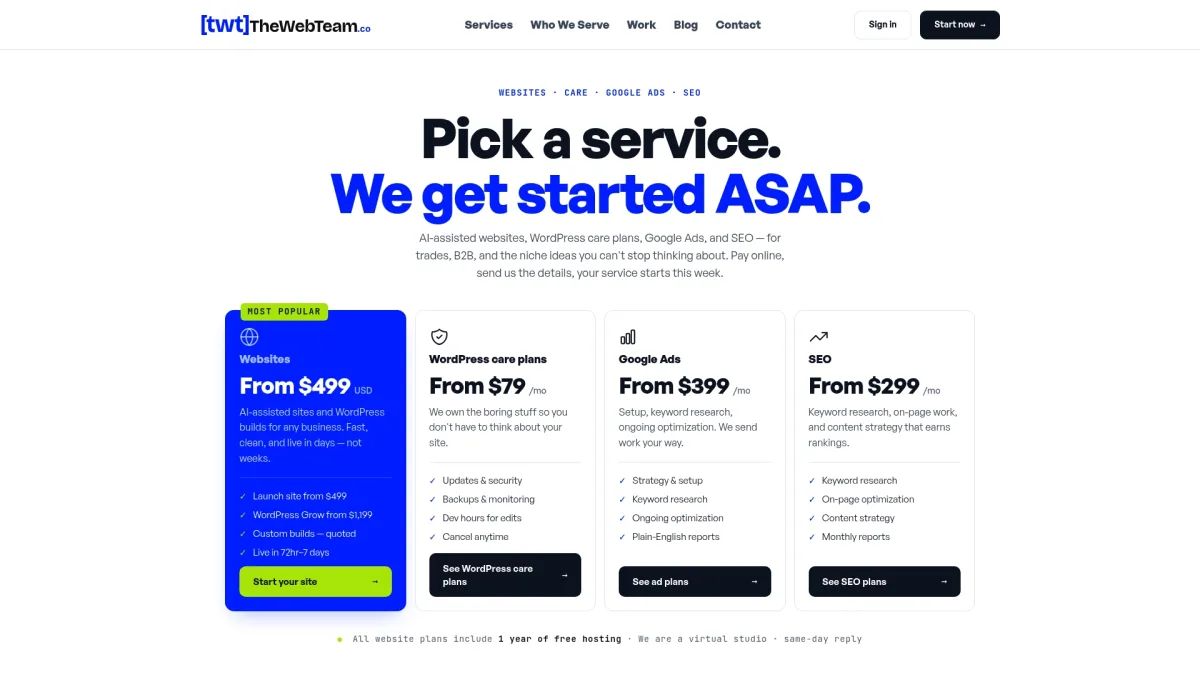
Thewebteam's B2B web design services are built for businesses that need results without the long agency timelines. Sites launch within days, not weeks, with hosting included and no hidden costs. Whether you need a new site to support a keyword-driven content plan or an existing site that needs technical SEO work, the team handles it. Browse the services and pricing to see what fits your current stage of growth.