
A website content strategy is defined as the operational framework for planning, developing, and managing content across its entire lifecycle to align user needs with business goals. Most marketing professionals and business owners treat content as a task list rather than a system. That gap is exactly what a content strategy closes. This guide explains what is website content strategy, why it matters for SEO and engagement in 2026, and how to build one that produces real results for your business.
What is website content strategy and why does it matter?
A website content strategy is the structured framework that turns scattered content efforts into a coordinated system. Without it, content creation becomes reactive, inconsistent, and disconnected from what your audience actually needs. The Interaction Design Foundation defines content strategy as the practice that transforms ad-hoc content creation into a structured process ensuring content drives traffic, engagement, or conversions.
The standard industry term is "content strategy," and it covers far more than writing blog posts. It governs every content decision on your site, from the words on your homepage to the structure of your service pages and the frequency of your updates. When content strategy is absent, even a well-designed website fails to guide visitors toward a decision.

Content strategy also sits at the intersection of SEO, user experience, and business development. A site built without a content framework tends to attract the wrong visitors, confuse the right ones, and convert very few. Getting this foundation right is the single most effective thing a marketing professional or business owner can do before publishing a single word.
What are the essential components of an effective website content strategy?
Every effective content strategy shares a core set of components. Miss one, and the whole system weakens.
- Audience research and personas. You need to know who you are writing for before you write anything. Personas define the problems, questions, and language your audience uses at each stage of their decision process.
- Goal setting with measurable outcomes. Content goals must connect to business outcomes: more qualified leads, lower bounce rates, higher search rankings. Vague goals produce vague results.
- Content audit. Before creating new content, audit what already exists. Identify what performs, what underperforms, and what is outdated. Content auditing and pruning is as important as creation for maintaining SEO health.
- Content types and channel selection. Not every audience wants long articles. Some respond to video, case studies, or comparison pages. Channel selection determines where content lives and how it reaches your audience.
- Editorial calendar and content briefs. An editorial calendar assigns topics, deadlines, and owners. Content briefs give writers the context, keywords, and structure they need to produce consistent output.
- Metrics and performance tracking. Define success before you publish. Organic traffic, time on page, conversion rate, and keyword rankings are the core metrics for most websites.
Pro Tip: Map every content piece to a specific customer awareness stage before you add it to your calendar. Content that speaks to someone who has never heard of your solution is very different from content written for someone comparing vendors.
Teams with documented content plans see better traffic and search visibility because they target specific customer awareness levels rather than publishing whatever feels timely.
How does content strategy differ from content planning and content design?
These three terms are related but not interchangeable. Confusing them leads to gaps in execution.
Content strategy is the high-level framework. It defines the why, the who, and the what. It answers questions like: What business problem does our content solve? Who are we writing for? What topics build authority in our space?
Content planning is the tactical roadmap that comes from the strategy. A content plan covers a defined timeline with an editorial calendar, briefs, and clear metrics. Think of strategy as the blueprint and planning as the construction schedule.
Content design is the practice of structuring content so it is clear, accessible, and aligned to user intent. Good content design means the right information appears in the right format at the right moment in the user's journey. Ignoring content design leads to visually appealing sites that fail to guide users effectively.
| Discipline | Focus | Output |
|---|---|---|
| Content strategy | Goals, audience, and framework | Strategy document, content pillars |
| Content planning | Schedule and execution | Editorial calendar, content briefs |
| Content design | Structure and clarity | Page layouts, content hierarchy |
All three work together inside the content lifecycle. Strategy sets direction. Planning creates the schedule. Design shapes how content is experienced. Skipping any layer creates friction for users and missed opportunities for search engines.
Pro Tip: When planning a website redesign, finalize your content strategy before any design work begins. Designers need real content volume and narrative to plan layouts accurately, not placeholder text.
How do you create and maintain an effective content strategy?
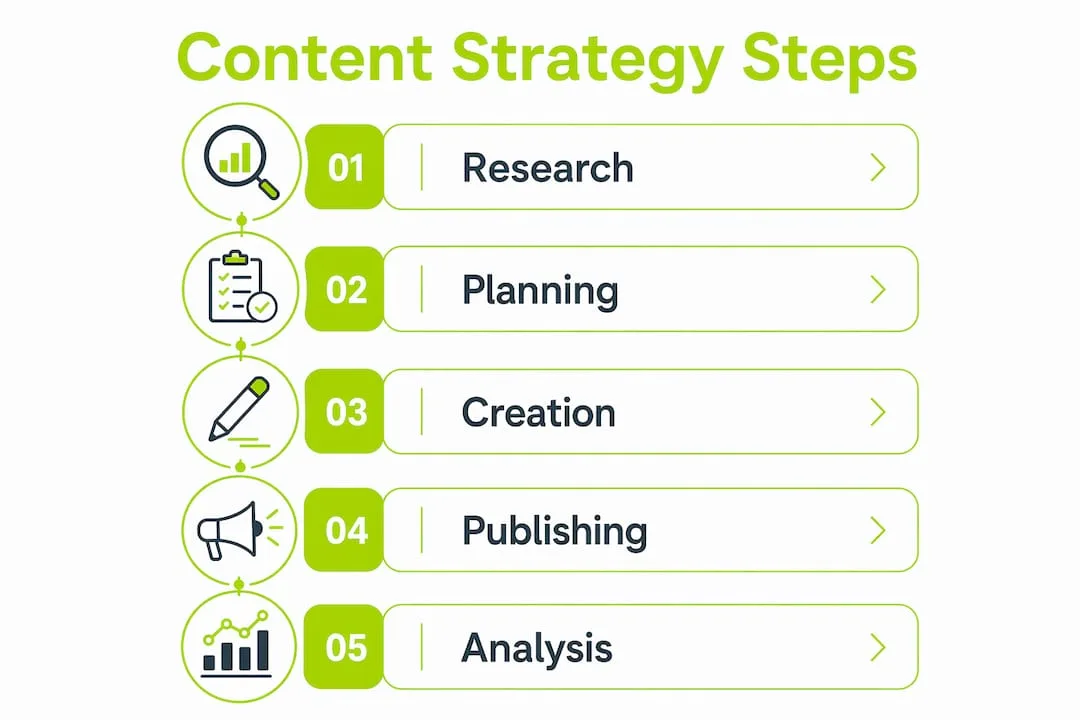
Developing a content strategy is a repeatable process. Follow these six steps to build one that holds up over time.
-
Define your goals and audience personas. Start with business objectives: generate leads, build brand authority, or support customer retention. Then build personas that capture your audience's awareness level, pain points, and preferred content formats. A B2B buyer researching industrial suppliers needs different content than a homeowner looking for a local tradesperson.
-
Conduct a content audit and gap analysis. Review every existing page on your site. Score each piece by traffic, engagement, and relevance to your current goals. Identify gaps where your audience has questions your site does not answer. This step prevents you from duplicating effort and reveals quick wins.
-
Map topics to customer awareness levels. Businesses often fail by producing content that assumes immediate buying readiness. Most visitors are not ready to buy on their first visit. Map topics across the full awareness spectrum: unaware, problem-aware, solution-aware, and comparing options. This builds trust before conversion pressure.
-
Build your editorial calendar and assign ownership. A calendar without named owners is just a wish list. Assign a responsible person to every content piece. Set realistic deadlines and build in review cycles. For most small to mid-size businesses, a monthly calendar reviewed weekly is the right cadence.
-
Produce, publish, and distribute content across channels. Publishing is not the finish line. Distribute each piece through email, social media, and internal linking to maximize reach. For B2B businesses, long-form content distributed through LinkedIn and organic search consistently outperforms short-form alternatives.
-
Track metrics and adjust continuously. Treat your content strategy as a living document. A flexible content backlog reviewed bi-weekly keeps your plan responsive to search trends and business changes. Rigid long-term plans become obsolete fast. Review performance data, retire what is not working, and double down on what is.
Why is content strategy crucial for SEO and engagement in 2026?
Content strategy is the primary driver of organic search performance. Without a plan, websites publish content that targets no specific intent, reaches no specific audience, and ranks for nothing meaningful.
95% of users still use traditional search, and brands that appear in AI-generated answers also rank on page one of Google. That overlap is not a coincidence. It reflects that well-structured, intent-matched content performs across every discovery channel simultaneously.
A content strategy improves SEO in several concrete ways:
- Topical authority. Publishing a cluster of related content signals expertise to search engines. A single blog post rarely ranks. A structured cluster of 8–12 interconnected pieces on a topic does.
- Intent matching. Strategy forces you to write for specific search queries rather than general topics. Pages written for specific intent convert at higher rates and rank more reliably.
- Content pruning. Fear of deleting content leads to content bloat that harms rankings and confuses visitors. A strategy includes regular audits to remove or consolidate weak pages.
- AI search visibility. AI assistants pull answers from pages that are clearly structured, authoritative, and directly answer user questions. Strategy creates those conditions by design.
- Multi-channel reach. A strategy maps content to channels. The same core topic can serve organic search, email newsletters, and social media simultaneously when planned correctly.
Targeting decision makers with SEO requires content that addresses their specific questions at each stage of the buying process. Strategy is what makes that targeting systematic rather than accidental.
What common pitfalls should you avoid in content strategy?
Most content strategy failures come from the same recurring mistakes. Knowing them in advance saves significant time and budget.
- Skipping audience research. Publishing content without confirmed audience insight is guesswork. Assumptions about what your audience wants are almost always wrong in at least one critical way.
- Prioritizing volume over relevance. Publishing more content does not improve rankings. Publishing content that matches specific user intent does. Ten well-targeted pages outperform fifty generic ones.
- Neglecting content audits. Content bloat harms SEO and confuses visitors. Outdated pages with thin content drag down the authority of your entire domain.
- Using rigid, inflexible plans. A content plan written in january and never revisited will be irrelevant by march. Build in regular review cycles from the start.
- Ignoring content design. Treating content as secondary to design causes layout problems and poor user experience. Content and design must be developed together.
- No clear ownership. Content without an assigned owner does not get published on time, reviewed, or updated. Every piece needs a named responsible person.
Pro Tip: Run a quarterly content audit even when your site is small. Catching thin or outdated content early prevents the compounding SEO damage that comes from letting it accumulate.
Key Takeaways
A website content strategy is the operational framework that connects content creation to business goals, and without it, even well-designed websites fail to attract, engage, or convert the right visitors.
| Point | Details |
|---|---|
| Strategy precedes execution | Define goals and audience personas before writing or publishing any content. |
| Content audit is non-negotiable | Auditing and pruning existing content protects SEO health and user clarity. |
| Map content to awareness stages | Content that assumes buying readiness too early misses most of your potential audience. |
| Treat the plan as a living document | Review your content backlog bi-weekly to stay aligned with search trends and business shifts. |
| Content design is part of strategy | Structure and clarity are not afterthoughts; they determine whether content actually guides users. |
Why content-first thinking changes everything
Most websites I see were built design-first. The client approved a beautiful mockup filled with placeholder text, and then the real content was squeezed in afterward. The result is almost always the same: navigation that does not match what users search for, service pages that describe features instead of solving problems, and a homepage that looks polished but says nothing specific.
Building a website content-first prevents that cycle entirely. When you know what you need to say before you design how to say it, the layout serves the message instead of fighting it. I have watched businesses cut their redesign timelines in half simply by finalizing their content strategy before a single wireframe was drawn.
The other mistake I see constantly is treating content strategy as a one-time project. You write the plan, hand it to a writer, and move on. Six months later, the content is stale, rankings have slipped, and nobody knows why. Strategy is an ongoing practice, not a deliverable. The businesses that win at content treat it like a product: they ship, measure, iterate, and improve on a regular cycle.
The discipline required is not complicated. It is just consistent. A bi-weekly backlog review and a quarterly audit are enough to keep most small business content programs healthy and growing.
— Jonathon
How Thewebteam helps you build a content-driven website
Thewebteam works with trades businesses, B2B companies, and niche industries that need websites built around content from day one, not retrofitted afterward. Every project starts with understanding your audience and goals before any design work begins.
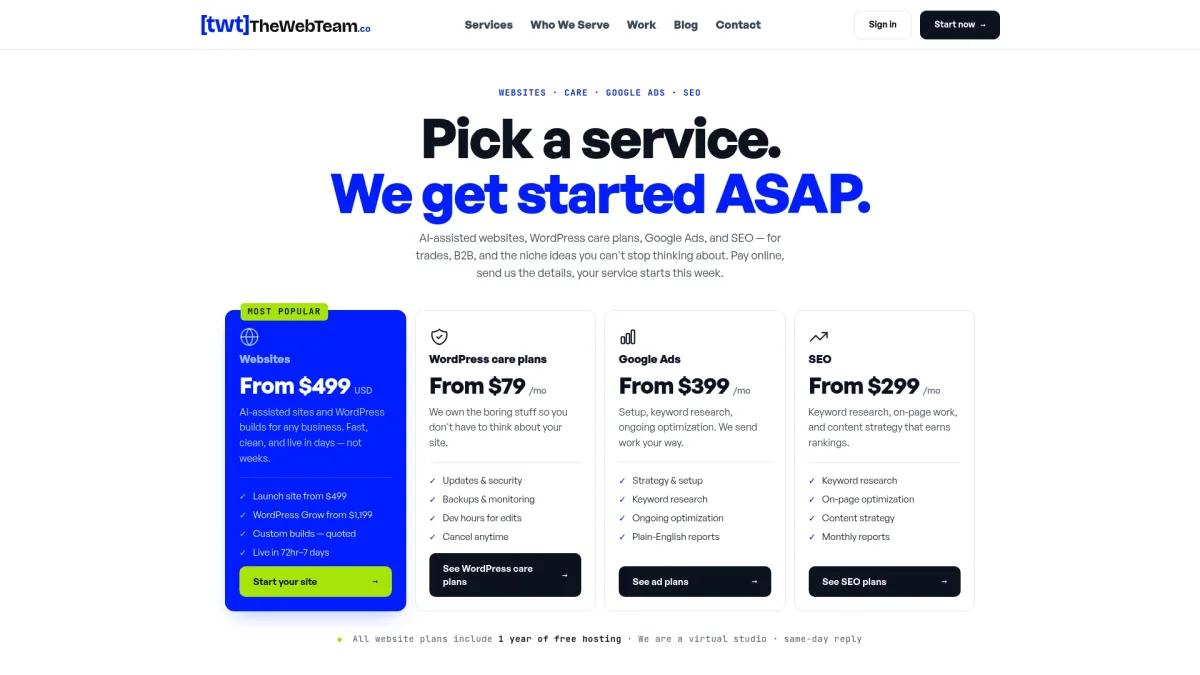
From content-driven web design to ongoing SEO and digital marketing support, Thewebteam handles the full picture. Clients get fast turnaround, transparent pricing, and a team that treats your website as a working business tool. If you want to see how a properly structured content strategy translates into real website performance, the services and pricing page outlines exactly what that looks like in practice.