
Case studies are defined as data-driven analyses of real-world outcomes that serve dual roles in modern SEO: they function as original content assets and as credibility signals that search engines and AI models use to evaluate authority. The role of case studies in SEO has grown sharply as AI-mediated search reshapes how content gets cited and ranked. Documented results like traffic increases up to 733% in three months show these are not soft marketing pieces. They are measurable performance drivers. For digital marketers, SEO professionals, and business owners, understanding how to build and distribute case studies correctly is now a core competency.
How do SEO case studies improve organic search performance?
Case studies generate organic traffic by targeting outcome-focused keywords that standard blog posts rarely capture. Phrases like "how we grew SaaS traffic in 15 months" or "B2B SEO results for manufacturing" attract searchers with high commercial intent. These are non-branded, specific queries that convert well and face less competition than generic terms.
The content structure of a well-built case study also helps search engines crawl and index pages more effectively. When challenge, methodology, and results sections each carry their own headings, search engines can parse the page as a structured document rather than a wall of text. This improves the chance of appearing in featured snippets and AI overviews.

Real numbers make the difference between a case study that ranks and one that doesn't. A 6x organic traffic increase in 15 months for a SaaS company named Kladana was driven by technical SEO cleanup, structured content briefs, and comprehensive internal linking. That combination is replicable and worth documenting in your own case studies.
Key performance signals a case study should capture include:
- Organic traffic growth (month-over-month and year-over-year)
- Keyword ranking changes across target and long-tail terms
- Impressions and SERP placement, not just clicks, to account for zero-click search trends
- Conversion rates tied to organic sessions
- Backlink acquisition resulting from the published case study itself
Tracking impressions alongside clicks matters because zero-click searches are now a significant share of all queries. A case study that only reports click data understates its own SEO value.
Pro Tip: Build a dedicated case study URL structure on your main domain (e.g., /case-studies/client-name) rather than burying results in blog posts. Dedicated URLs accumulate authority faster and are easier to internally link.
What is AI citation optimization and why does it matter for SEO case studies in 2026?
AI citation optimization is the practice of structuring content so that large language models (LLMs) like ChatGPT, Perplexity, and Claude can parse, extract, and cite it accurately. For case studies, this means presenting data in clean, crawlable text with explicit labels for each section. A case study that buries its results in a PDF or uses vague language will not get cited by AI systems.
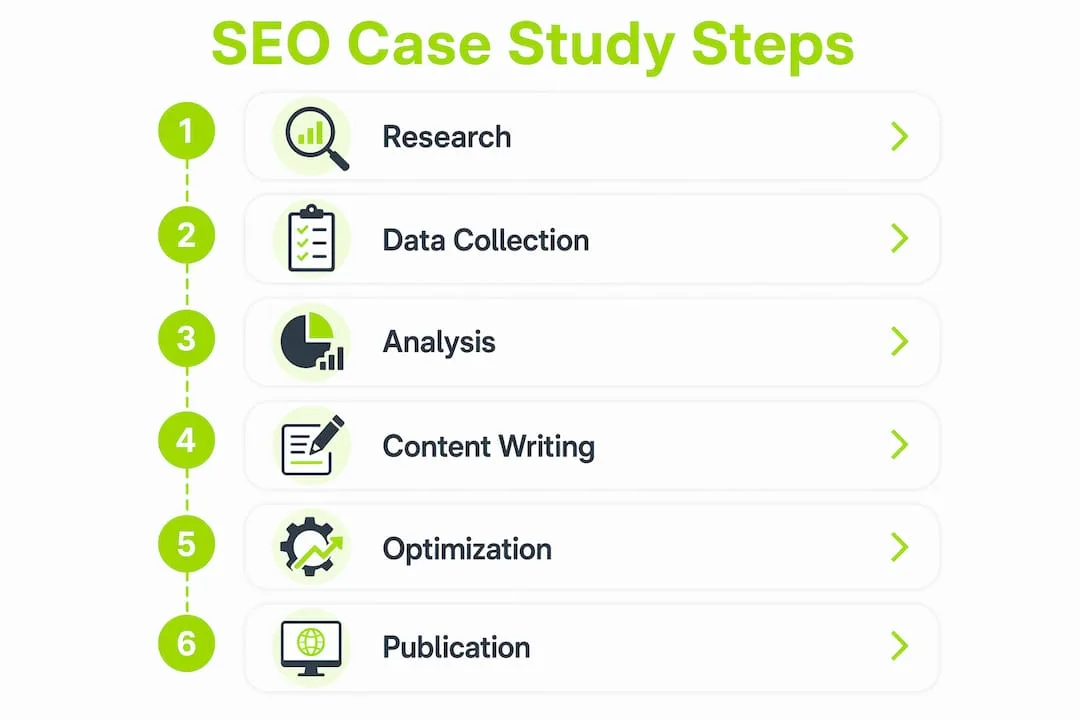
The shift matters because AI-generated search overviews now appear above traditional organic results for many queries. Being cited in an AI overview delivers visibility without requiring a top-three ranking. Publishing condensed versions on platforms like LinkedIn with core data points increases the frequency AI models cite a case study's content. This cross-posting approach broadens the citation surface area across multiple channels.
To structure case studies for AI citation, follow this sequence:
- Open with a one-sentence result summary. State the outcome before the backstory. AI models prioritize the first 30% of a document.
- Label every section explicitly. Use headings like "Challenge," "Approach," and "Results" so LLMs can extract structured data cleanly.
- Quantify every claim. Replace "significant growth" with "482% increase in organic traffic over 21 months."
- Publish on your own domain first. Internal linking and crawlable formats on owned pages give AI systems a stable, authoritative source to reference.
- Distribute condensed versions with backlinks. Post summaries on LinkedIn, relevant subreddits, and industry forums, always linking back to the full case study.
The contrast with traditional SEO is worth noting. Traditional SEO focuses on ranking for keywords. AI citation optimization focuses on becoming the source that AI tools quote when answering questions. Both goals are worth pursuing, and a well-structured case study achieves both simultaneously.
Pro Tip: Engage relevant Reddit communities by sharing genuine insights from your case study, not promotional links. Reddit threads frequently appear in AI training data and citation pools, giving your content an additional citation pathway.
How do case studies serve as sales enablement assets that also support SEO?
Case studies reduce buyer friction at the exact moment a prospect needs proof. During a sales call or tender process, a link to a documented result is more persuasive than any claim a salesperson can make. Using case studies as proof points during sales calls and tenders increases referral traffic and trust, which feeds back into organic signals.
The SEO benefit of this sales-path engagement is indirect but real. When a prospect shares a case study with a colleague, that generates a new visit. When a procurement team bookmarks it for review, that signals dwell time and return visits. Search engines interpret these engagement patterns as content quality indicators.
The benefits of aligning sales enablement and SEO goals through case studies include:
- Referral traffic from shared links in emails, Slack channels, and procurement tools
- Branded search volume increases as prospects search for your company after seeing the case study
- Backlinks from industry blogs or news sites that cover your documented results
- Reduced bounce rates because prospects arrive with intent and read thoroughly
Integrating these two goals means publishing case studies in a format that works for both audiences. A sales team needs a shareable URL and a clean layout. An SEO strategy needs crawlable text, internal links, and structured headings. These requirements are identical, which makes case studies one of the highest-return content investments available.
Pro Tip: Create a one-page PDF summary of each case study for sales use, but always link it back to the full web version. The PDF drives conversations; the web page earns the SEO credit.
What are best practices for creating effective SEO case studies?
The structure of a case study determines whether it ranks, gets cited, and converts readers. Content relevance and originality are the primary ranking factors for case studies in 2026, with AI and search engines prioritizing helpfulness over technical tricks. A case study that matches search intent precisely and presents verified data will outperform a technically polished but vague one.
Follow these structural principles:
- Lead with the result. State the outcome in the title and the first sentence. Do not make readers scroll to find the number.
- Use crawlable text, not gated PDFs. Publishing on owned domains in indexable formats maximizes AI and search engine citation likelihood.
- Internal link aggressively. Connect each case study to related service pages, blog posts, and other case studies. This distributes authority across your site and helps search engines understand your topical depth. A long-form content strategy for B2B SEO works best when case studies anchor the internal link structure.
- Include a methodology section. Readers and AI models both want to know what you actually did, not just what happened.
- Avoid vague language. "We improved their rankings" is useless. "We moved 14 target keywords from page 3 to page 1 in 90 days" is citable.
The distribution plan matters as much as the content itself. Publish the full case study on your domain, then post a condensed version on LinkedIn within 48 hours. Share key findings in relevant communities where your audience already spends time. Each distribution point creates a new citation pathway for both human readers and AI systems.
Pro Tip: Add a structured data markup (Schema.org Article or FAQPage) to your case study pages. This gives search engines explicit signals about the content type and improves eligibility for rich results.
Examples of successful SEO case studies and lessons learned
Documented case studies with real metrics reveal patterns that any SEO practitioner can apply. Two examples stand out for their scale and the clarity of their documented methods.
| Case Study | Result | Key Drivers | Timeframe |
|---|---|---|---|
| Kladana (SaaS) | 6x organic traffic | Technical cleanup, structured briefs, internal linking | 15 months |
| Indigo Software | 482% traffic growth | Keyword targeting, content architecture, funnel alignment | 21 months |
The Kladana result is particularly instructive. The growth came from eliminating guesswork with targeted keyword capture and aligning content to the buyer funnel at each stage. Technical SEO cleanup removed crawl errors and duplicate content that had suppressed rankings for months. The lesson is that compounding SEO gains require fixing the foundation before scaling content.
The Indigo Software result shows what consistent, long-term effort produces. A 482% increase over 21 months averages out to steady, compounding growth rather than a single spike. This pattern is common in well-executed SEO programs and is exactly the kind of outcome a case study should document to demonstrate sustained value.
Both examples align with AI citation best practices. The results are specific, the timeframes are clear, and the methods are named. That combination makes them easy for both human readers and AI models to extract and reference.
Key Takeaways
Case studies are the most credible content format for demonstrating SEO effectiveness because they combine original data, structured formatting, and real-world proof in a single, citable asset.
| Point | Details |
|---|---|
| Lead with results | State the outcome in the first sentence so AI models and readers capture the key claim immediately. |
| Publish on your own domain | Crawlable, indexed pages on owned domains earn more citations from search engines and AI systems than gated PDFs. |
| Distribute across channels | Post condensed versions on LinkedIn and relevant communities to broaden citation reach and referral traffic. |
| Align sales and SEO goals | Case studies that work for sales calls also generate referral traffic and engagement signals that support organic rankings. |
| Track visibility, not just clicks | Include impressions and SERP placement data to capture the full SEO value of a case study in a zero-click search environment. |
Why I think most businesses are leaving serious SEO value on the table with case studies
Most businesses treat case studies as a sales afterthought. They get written once, saved as a PDF, and emailed to prospects. The SEO value never materializes because the content never gets indexed.
What I've seen work consistently is treating each case study as a content hub. You publish the full version on your domain, build internal links from your service pages to it, post a summary on LinkedIn, and then let it compound. The businesses that do this see their case studies start ranking for outcome-focused queries within three to four months. The ones that keep them in PDFs see nothing.
The AI citation angle has changed my thinking on distribution. I used to focus entirely on on-page SEO for case studies. Now I think about where AI models are likely to encounter the content. A Reddit thread, a LinkedIn post, a cited blog article. Each of those touchpoints increases the probability that an AI overview will reference your result when someone asks a relevant question.
The other thing most people miss is the internal linking opportunity. Every case study you publish should link to your core service pages, and those service pages should link back. That bidirectional linking structure tells search engines that your case studies are authoritative evidence for the services you offer. It's one of the cleanest authority signals available, and most sites ignore it completely.
If you're building a content strategy and you haven't prioritized case studies yet, start there. The return on a single well-structured case study outpaces most blog posts by a wide margin, especially when you factor in the sales enablement value alongside the organic traffic.
— Jonathon
Thewebteam builds SEO case studies that actually rank
Thewebteam works with trades businesses, B2B companies, and niche industries to produce website content that performs in search and converts in sales conversations. That includes building and publishing case studies structured for both search engine indexing and AI citation.
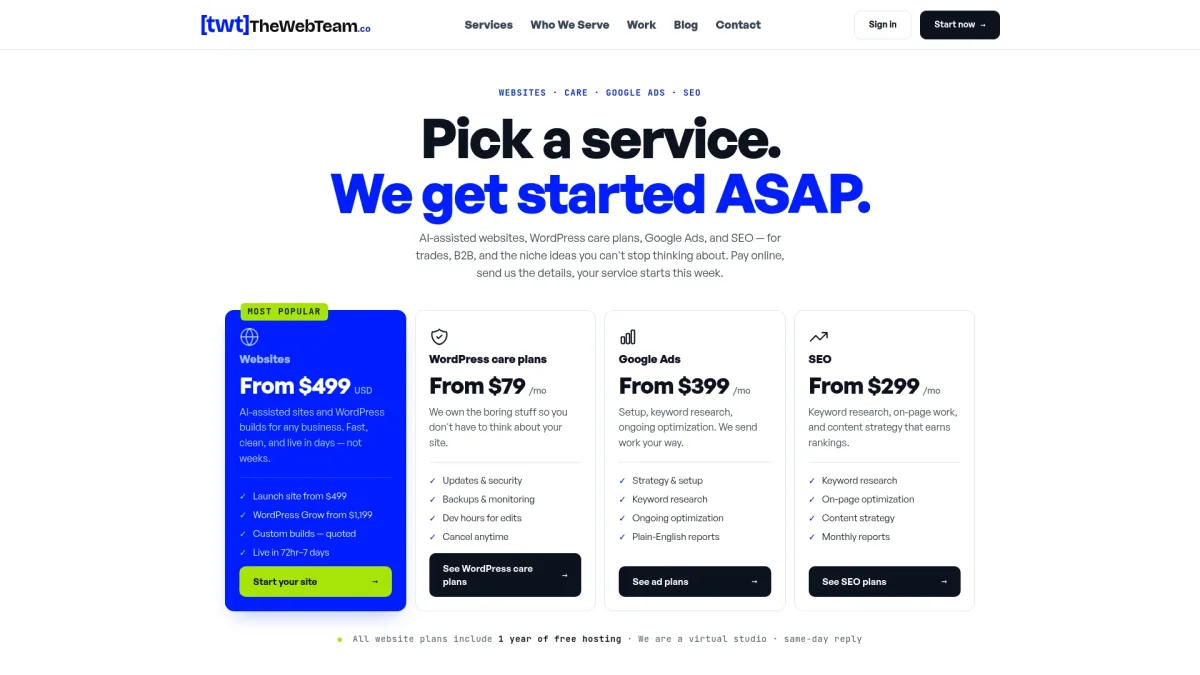
The web design portfolio shows real outcomes from real clients, with documented results rather than vague claims. If you want case studies that earn organic traffic and support your sales team at the same time, the services and pricing page outlines exactly how Thewebteam approaches content-driven SEO for businesses that need results, not guesswork.